

A lawn that’s thinning, going brown, or refusing to bounce back can feel personal—especially in Sydney, where the weather can swing from heavy rain to hot, drying winds faster than you can sharpen the mower blades, making gardening a constant challenge.
The good news: most “dying” lawns aren’t actually dead. They’re stressed. And if you treat the real cause (not just the colour), you can usually turn things around without starting from scratch.
This guide walks you through:
• How to tell dead grass from dormant grass
• A quick diagnosis you can do in 10 minutes
• The most common Sydney causes (and the fixes that work)
• A realistic recovery plan for the next 48 hours, 7 days, and 30 days
• When it’s time to change tactics (or call in experienced help)
First: Is it dead or just dormant?
Before you spend money or energy, work out what you’re dealing with.
The 60-second pull test
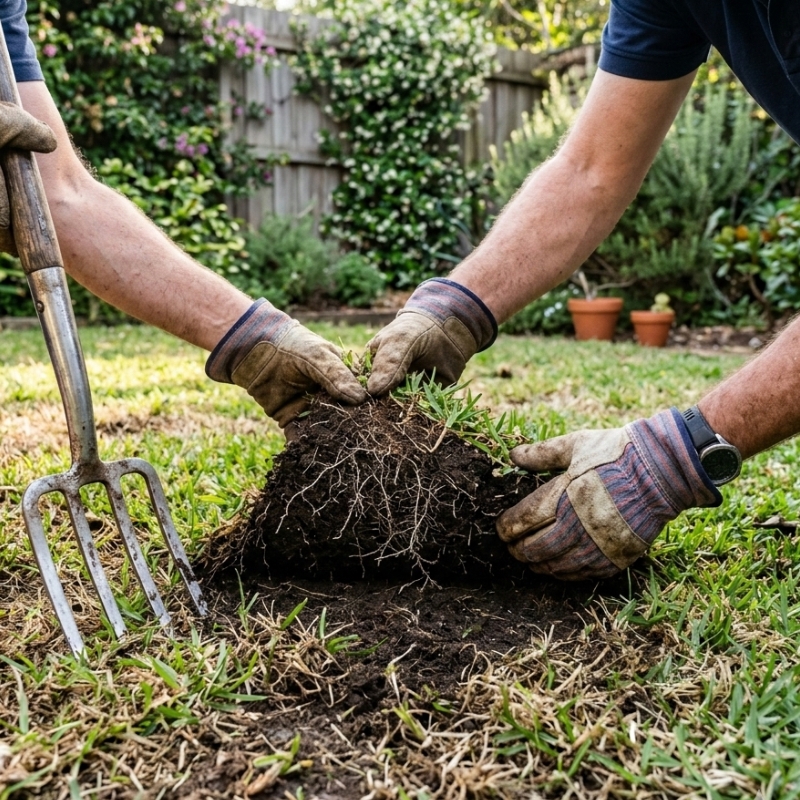
Grab a small handful of grass and tug firmly.
• If it lifts out easily with no resistance and you see bare soil, that patch is likely dead (or very close).
• If it resists and you can see some roots holding on, it’s stressed, but recoverable.
The crown check
Part the grass down to the base (the crown) near the soil line.
• If the crown is pale straw-coloured and brittle: likely dead.
• If the crown has any green or creamy-white firmness: there’s life to work with.
Quick answer
If your lawn has brown tops but the base still shows green, and the turf resists the pull test, it’s usually dormant or stressed—not dead—and it can recover with the right watering, mowing height, and soil correction.
A 10-minute lawn triage (Sydney edition)
Walk your lawn and look for patterns. Patterns tell you causes.
1) Is the damage in full sun, shade, or both?
• Full sun only: heat stress, underwatering, hydrophobic (water-repellent) soil, mowing too short
• Shade only: lack of light, fungal issues, over-watering, compaction from foot traffic
• Both: soil compaction, nutrient imbalance, widespread pest activity, and irrigation coverage issues
2) Are there distinct patches, or an even fade?
• Distinct patches: grubs, dog urine, irrigation coverage gaps, fungus
• Even fade: drought stress, mower scalping, nutrient deficiency, thatch build-up
3) What does the soil feel like?
Push a screwdriver into the ground after watering.
• Slides in easily: soil structure is decent
• Hard to push in: compaction (very common in Sydney’s clay-heavy areas)
• Wet and squelchy for days: drainage problem
4) Look closely at the blades
• Ragged, torn tips: blunt mower blade (creates stress and browning)
• Straw-coloured with a green base: drought/heat stress or dormancy
• Dark spots, slimy areas, or a “smoke ring” look: possible fungal disease
• Chewed or missing sections: insect activity
The most common reasons Sydney lawns struggle (and what to do)
Sydney lawns usually fail for a handful of repeat offenders. Fix the right one, and recovery becomes much faster.
Cause 1: Mowing too short (scalping) + mowing at the wrong time
Scalping is one of the fastest ways to create brown patches, especially in warm-season grasses common around Sydney (buffalo, kikuyu, couch). Short mowing removes the plant’s “solar panels”, exposes crowns to heat, and dries the soil.
What it looks like
• Brown or straw-coloured patches after mowing
• Uneven “bald” spots on slight rises or bumps
• Slow regrowth, especially during heat or dry periods
Fix that works
• Raise your mower height immediately (don’t “reset” it low)
• Never remove more than about one-third of the leaf length in a single mow
• Mow when grass is dry (wet mowing tears blades and can spread disease)
• Sharpen or replace mower blades (clean cuts = less stress)
Cause 2: Uneven watering (or watering that never reaches roots)
In Sydney, it’s common to water “often but lightly” and still end up with a thirsty lawn. Light watering wets the surface, encourages shallow roots, and makes grass more vulnerable in hot spells.
What it looks like
• The lawn greens up right after watering, then fades quickly
• Dry, crunchy soil a few centimetres down
• Brown patches near edges or corners (sprinkler coverage gaps)
Fix that works
Water less often, but more deeply—so moisture reaches the root zone.
Also, align your approach with local water-wise guidance. Sydney Water’s practical tips are a solid reference for using water efficiently while keeping your garden alive: Sydney Water water-wise guidelines.
A simple sprinkler check (no gadgets needed)
• Place 6–10 straight-sided containers (like tuna tins) around the lawn
• Run sprinklers for 10 minutes
• Compare how much water each container collected
If some tins are nearly empty while others are full, your lawn isn’t being watered evenly—no amount of “more time” fixes that without adjusting the system or moving sprinklers.
Cause 3: Hydrophobic soil (water-repellent patches)
After prolonged dry periods, some soils become hydrophobic—water beads on top and runs off, leaving the root zone dry even if you’re “watering.”
What it looks like
• Water runs across the surface instead of soaking in
• Patches stay dry while nearby spots look fine
• Soil looks dusty and won’t take moisture easily
Fix that works
• Water slowly in cycles (short bursts with breaks in between)
• Lightly rake the surface to open it up
• Apply a wetting agent if needed (especially for recurring repellent patches)
• Topdress lightly with a soil/sand blend to improve infiltration over time
Cause 4: Soil compaction (a big one in Sydney)
Compacted soil blocks oxygen, blocks water movement, and makes roots work overtime. Clay soils can compact easily, especially after rain plus foot traffic.
What it looks like
• Thin lawn that doesn’t thicken up even with watering
• Puddling or water sitting on the surface
• Hard ground that’s difficult to dig
Fix that works
• Core aerate (not just spike aerate) when the lawn is actively growing
• Follow with a light topdress (depending on turf type and soil)
• Reduce traffic while it recovers
• Keep mower height slightly higher during recovery
Q&A: “Do I aerate first or fertilise first?”
If compaction is obvious, aerating first is usually better. Fertiliser won’t help much if roots can’t access air and water properly. Once the soil can breathe, feeding becomes more effective.
Cause 5: Nutrient issues (but not always “needs more fertiliser”)
A lawn can look hungry, but applying fertiliser at the wrong time can worsen stress—especially during extreme heat or drought conditions.
What it looks like
• Pale overall colour, slow growth
• Thin coverage with poor recovery after mowing
• Yellowing that doesn’t match watering patterns
Fix that works
• Feed when the grass is actively growing, and conditions are mild
• Water in properly (or time feeding with expected rain if permitted/appropriate)
• Consider a simple soil test if problems repeat (pH and nutrient balance matter)
If you’re working through multiple garden issues at once, having a simple reference list of garden maintenance tips can help you stay consistent without overcorrecting in one weekend.
Cause 7: Pests (grubs) and critters
Lawn grubs can destroy roots and create fast-spreading patches.
What it looks like
• Patches that lift like a loose carpet
• Birds pecking or scratching at the lawn
• Rapid thinning that doesn’t respond to watering
What to do
• Confirm first (don’t treat blindly). Lift a small section of turf at the edge of a patch and inspect the top few centimetres of soil.
• If you’re unsure whether it’s grub damage or something else (like fungal stress), treat the diagnosis first—misdiagnosis is how lawns get worse.
Cause 8: Fungal disease (often linked to moisture + shade)
Fungal issues can appear after humid stretches, overcast days, and repeated evening watering—especially in shaded areas.
What it looks like
• Patches with a distinct edge or ring
• Slimy blades in the morning
• Areas that stay damp longer than the rest
Fix that works
• Improve airflow (trim back overhanging plants where possible)
• Water in the morning, not at night
• Raise mower height slightly
• Reduce nitrogen-heavy feeding while disease pressure is high
• If the problem persists or spreads quickly, get proper identification before applying treatments
A realistic lawn recovery plan (what to do now)
This is where most people go wrong: doing everything at once. The better approach is staged, so you don’t stack stress on top of stress.
In the next 48 hours, stabilise and stop the damage
• Raise mowing height (or pause mowing for a week if growth is minimal)
• Water deeply if the soil is dry below the surface (avoid shallow “sprinkles”)
• Check sprinkler coverage with the container test
• Rake out loose dead material lightly (don’t scalp or aggressively dethatch yet)
• Avoid heavy fertiliser during extreme heat or obvious drought stress
Over the next 7 days, fix the root cause
Choose the fixes that match your diagnosis.
• Compaction: core aerate (when appropriate for the season and growth)
• Hydrophobic soil: cycle watering + wetting agent if needed
• Thatch: moderate dethatching/raking (avoid going too hard)
• Nutrients: feed lightly when conditions are mild and growth is active
• Pests/disease: confirm before treating, then act with a targeted plan
This is also the stage where a broader approach to lawn and garden upkeep helps—because lawns rarely struggle alone. Drainage, shade, soil health, and garden beds all influence how turf performs.
Over the next 30 days: rebuild thickness and resilience
• Keep mowing consistently at a healthier height
• Water based on soil moisture, not the calendar
• Patch repair: topdress and encourage lateral growth, or overseed where suitable
• Reduce traffic on recovering areas
• Re-check problem spots after rain and after hot days (Sydney lawns often fail in “events”)
A quick timeline for expectations
• 3–7 days: colour improves if water and mowing are corrected
• 2–4 weeks: thinning begins to fill if roots are recovering
• 6–10 weeks: more significant thickening (assuming the cause is fixed)
If nothing changes after 2–3 weeks of correct care, it’s a sign the underlying issue hasn’t been identified (or there are multiple issues overlapping).
Patchy lawn repair without redoing the whole thing
If you’ve got bare spots, you’ve got two goals:
• Stop the spot from getting bigger
• Encourage grass to spread or re-establish
Step-by-step patch repair
• Remove dead material so new growth isn’t blocked
• Loosen the top few centimetres of soil (especially if compacted)
• Apply a thin layer of quality topdress mix
• Water to keep the area consistently moist (not constantly wet) while it establishes
• Keep mower wheels off it until it firms up
Common Sydney lawn scenarios (and what they usually mean)
“It went brown after days of rain”
Often a mix of:
• waterlogging + low oxygen in soil
• fungal pressure in humid conditions
• compaction showing up when soil is saturated
Focus on drainage, reducing traffic, and morning-only watering once rain eases. If puddles remain for days, drainage needs attention.
“It browned right after a heatwave”
Often:
• heat stress + shallow roots
• hydrophobic soil
• mowing too low beforehand
Raise mowing height, water deeply (within local rules), and check if water is infiltrating or running off.
“It’s thin in winter and won’t thicken up”
Often:
• shade and reduced growth
• compaction from wet-season traffic
• mowing too short heading into cooler months
Lift mowing height, reduce traffic, and plan aeration when the lawn is actively growing again.
“Only the dog’s favourite spots are dying”
That’s commonly urine burn plus compaction. Flush affected spots with water when possible, and encourage recovery with topdress and consistent mowing height.
When DIY stops being worth it
Some triggers mean the problem is beyond simple tweaks:
• Large areas lifting easily like a rug (root loss)
• Ongoing puddling/waterlogging after light rain
• Repeated grub damage season after season
• Suspected chemical or salt damage
• A disease that spreads quickly despite correct watering and mowing
• Irrigation coverage issues you can’t resolve with simple adjustments
At that point, it can help to get experienced eyes on the lawn to help with lawn problems, so you’re not guessing and accidentally applying the wrong fixes.
FAQ: Reviving a struggling lawn in Sydney
How do I tell if my lawn is dead?
Do the pull test and crown check. If the grass pulls out easily with no roots holding and the crown is brittle straw-coloured, it’s likely dead. If it resists and the crown shows green or firm pale tissue, it can usually recover.
Why is my lawn brown in patches but green elsewhere?
Patchiness commonly comes from uneven watering coverage, hydrophobic soil spots, dog urine, grubs, or localised fungus. The container sprinkler test and a quick inspection under the turf edge can narrow it down fast.
Should I fertilise a struggling lawn?
Not always. If the lawn is heat-stressed, droughted, or waterlogged, heavy feeding can make things worse. Stabilise mowing height and watering first, then feed lightly when growth conditions are mild and active.
How often should I water to revive a lawn?
Watering frequency depends on your soil and weather, but the principle is deep watering that reaches roots rather than daily light sprays. Follow local water-wise guidance and any current restrictions, and adjust based on soil moisture rather than habit.
Is aeration worth it in Sydney clay soils?
Often, yes. Compaction is a frequent cause of thinning lawns in clay-heavy areas. Core aeration improves oxygen and water movement so roots can recover and deepen.
Why does my lawn look worse after mowing?
Likely mowing too low, mowing when wet, or using blunt blades, tearing grass tips. Raise the mower height, mow when dry, and sharpen blades to reduce stress.
Can a lawn recover from grub damage?
If caught early, sections can recover once the pest issue is addressed and the lawn is supported with correct watering and gentle mowing. If roots are severely eaten, you may need more intensive repair.