

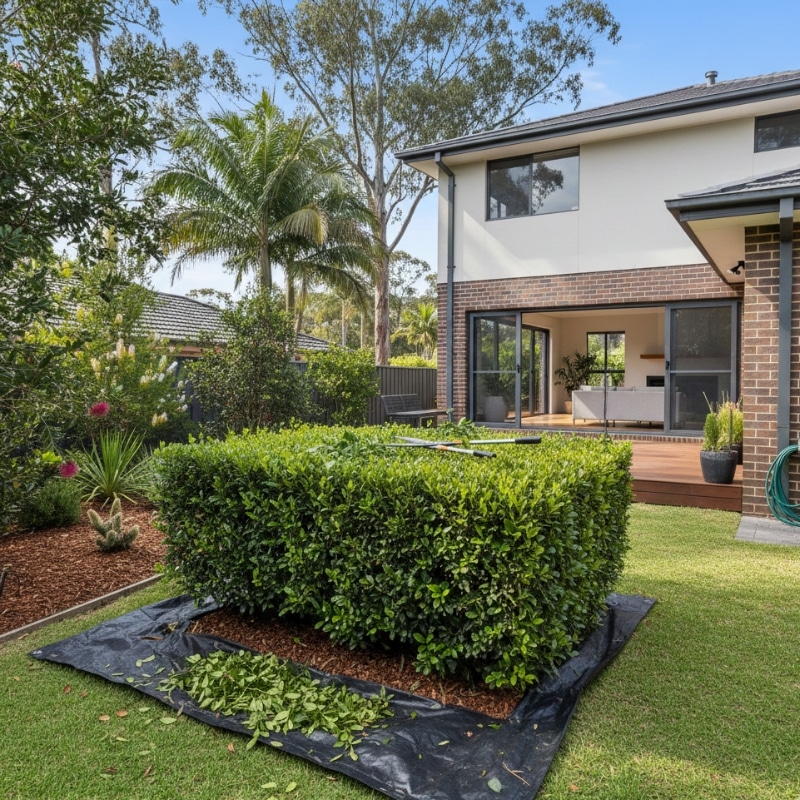
Hedges are a big part of Sydney gardens. From neat boundary screens in the Inner West to privacy hedges in the Hills District and Northern Beaches, they shape how outdoor spaces look and feel.
Yet many homeowners unknowingly damage their hedges through small but repeated trimming mistakes. The result is often patchy growth, brown leaves, thinning at the base, or hedges that never quite recover their shape.
This guide breaks down the most common hedge trimming mistakes seen across Sydney gardens, explains why they cause problems in our local climate, and shows you what to do instead—so your hedges stay dense, healthy, and easy to manage long term.
Why does hedge trimming go wrong so often in Sydney
Sydney’s climate encourages fast growth, but it also punishes poor technique.
- Warm summers can scorch freshly cut foliage
- Mild winters still trigger growth spurts
- Sudden heatwaves stress exposed inner leaves
- Coastal winds dry out new cuts quickly
Many trimming issues aren’t caused by neglect—they come from trimming at the wrong time, removing too much at once, or shaping in ways that fight how hedges naturally grow.
Mistake 1: Trimming at the wrong time of year
One of the most common hedge trimming mistakes is cutting simply because the hedge “looks messy,” without considering timing.
In Sydney, hedges respond very differently depending on the season.
Why does this cause problems
- Summer trimming can expose inner foliage to intense sun, causing leaf burn
• Late autumn cuts may not recover before cooler weather
• Winter trimming can slow regrowth or leave hedges sparse
What to do instead
- Do most shaping trims in spring and early summer
- Use light maintenance trims during peak growth periods
- Avoid heavy cuts during extreme heat or cold snaps
- If unsure, delay rather than rush a major trim
If timing is unclear—especially with fast-growing or mature hedges—seeking expert hedge trimming in Sydney can prevent long-term damage while keeping growth under control.
Mistake 2: Cutting too much off in one go
Trying to “fix” an overgrown hedge in a single session is a classic mistake.
Why does this cause problems
- Removing too much foliage shocks the plant
- Sudden exposure stresses inner branches
- Recovery can take months—or fail entirely
- Some species won’t regrow from old wood
What to do instead
- Follow the one-third rule: never remove more than a third of the hedge at once
- Renovate over multiple trims spaced weeks apart
- Observe how the hedge responds before cutting again
If a hedge has been neglected for years, staged trimming is far safer than an aggressive cutback.
Mistake 3: Trimming hedges straight up and down
Flat-sided hedges might look neat at first, but they’re a recipe for thinning at the bottom.
Why does this cause problems
- Upper growth blocks light from lower branches
- Bases become bare and woody
- Hedges lose density over time
What to do instead
- Shape hedges wider at the bottom than the top
- Slight taper allows sunlight to reach lower growth
- Use a string line or visual guide for consistent angles
This small adjustment alone solves many “bare bottom” hedge complaints seen across Sydney suburbs.
Mistake 4: Using blunt or dirty tools
Tools matter more than most people realise.
Why does this cause problems
- Dull blades tear rather than cut cleanly
- Torn stems invite pests and disease
- Dirty tools can spread fungal problems between plants
What to do instead
- Sharpen hedge trimmers regularly
- Clean blades before and after trimming
- Use secateurs for thicker or woody growth
- Avoid forcing trimmers through dense stems
Clean, sharp cuts heal faster and lead to thicker regrowth.
Mistake 5: Trimming too frequently
Over-trimming is just as damaging as neglect.
Why does this cause problems
- Constant cutting weakens the hedge
- New growth doesn’t have time to harden
- Hedges become thin and stressed
What to do instead
- Let hedges grow between trims
- Trim with intention, not habit
- Adjust frequency based on species and season
A healthy hedge needs time to photosynthesise and rebuild energy between trims.
Mistake 6: Ignoring hedge species differences
Not all hedges respond the same way to trimming.
Common Sydney hedge species include:
• Lilly Pilly
• Murraya
• Viburnum
• Photinia
• Buxus (Box)
Why does this cause problems?
- Some species regrow easily from older wood
- Others won’t recover if cut back too hard
- Incorrect technique leads to permanent gaps
What to do instead
- Identify your hedge species before major trimming
- Research how it responds to hard cuts
- When uncertain, keep trims lighter and staged
This is where learn more about hedge trimming techniques can save years of frustration.
Mistake 7: Forgetting to check for birds and wildlife
Sydney gardens are home to many native birds, especially during breeding seasons.
Why does this cause problems
- Trimming during nesting can harm wildlife
- Disturbance may be unlawful in some situations
- It can lead to neighbour complaints or disputes
What to do instead
- Inspect hedges carefully before trimming
- Delay work if nests are present
- Keep wildlife considerations in mind year-round
General guidance on tree and hedge disputes and responsibilities can be found through the Land and Environment Court of NSW’s trees and hedges information hub, which explains how neighbour and vegetation issues are handled in NSW.
Mistake 8: Ignoring safety and access risks
Hedge trimming isn’t always a ground-level task.
Why does this cause problems
- Falls from ladders are common
• Overreaching causes uneven cuts and injuries
• Hedges near boundaries or structures create risk
What to do instead
- Use stable platforms, not makeshift solutions
- Don’t trim above shoulder height without proper access
- Stop if visibility or balance is compromised
For tall, awkward, or boundary-line hedges, help with difficult trimming jobs can reduce risk while protecting the hedge’s shape and health.
How to fix a hedge that’s already been trimmed badly
If mistakes have already happened, recovery is still possible in many cases.
Short-term recovery (first 2–4 weeks)
- Water deeply to reduce stress
- Avoid fertilising immediately after heavy cuts
- Protect from harsh sun where possible
Medium-term recovery (1–3 months)
- Apply light feeding once new growth appears
- Trim lightly to encourage even regrowth
- Focus on shaping, not size reduction
Long-term recovery
- Accept that full recovery may take seasons
- Maintain correct shape to prevent repeat issues
- Adjust trimming frequency based on growth response
Patience is key—forcing recovery usually makes things worse.
When trimming stops being a DIY task
There’s a point where continuing to cut can do more harm than good.
Consider professional input when:
• Hedges are well above head height
• Major renovation is required
• Growth is close to structures or boundaries
• The hedge hasn’t responded to repeated trims
In these cases, careful assessment and staged work protect both the hedge and the surrounding property.
FAQ
Why is my hedge brown after trimming?
Usually, it is due to sun exposure on inner leaves, trimming during heat, or blunt tools causing tissue damage.
Can you kill a hedge by trimming it too hard?
Yes. Some species won’t regrow from old wood if cut back excessively.
How often should hedges be trimmed in Sydney?
It depends on species, location, and season, but over-trimming is a common cause of poor hedge health.
What shape keeps hedges thick at the bottom?
A slight taper—wider at the base, narrower at the top—allows light to reach lower growth.
Should I trim hedges before selling a home?
Only lightly. Heavy trimming close to sale can stress plants and reduce visual appeal.
Final thoughts
Most hedge problems in Sydney gardens don’t happen overnight. They build up slowly through small trimming mistakes—poor timing, harsh cuts, the wrong shape, or simply trimming too often without a clear plan.
By understanding how hedges respond to Sydney’s climate and adjusting how (and when) you trim, you can avoid patchy growth, bare bases, and stressed plants that never quite recover. A slower, more deliberate approach almost always produces better long-term results than aggressive cutting.
If you’re ever unsure, it’s worth pausing before making the next cut. A hedge can take seasons to recover from one bad trim, but with the right approach, it can stay dense, healthy, and low-maintenance for years to